

Your support changes lives. Thank you!
Learn More
Boost Search Results
Off
Caring for Others is Stressful
- The Caregiver Story
- When Should a Caregiver Seek Care?
- Support for Caregivers
- ADAA's Online Free Peer-to-Peer Communities
- ADAA Resources

Caring for Others is Stressful
More than one in five Americans today are caregivers, providing care and support to an adult or child with special needs. That is 21.3 percent of the population caring for someone in some way, somewhere across the nation. And in that population of family caregivers, four in 10 – roughly 38 percent - find their situation extremely stressful. We all experience stress in our lives, but going beyond stress, according to Caregiver.org, which has called caregiver depression an all-too silent health crisis, 20 percent of family caregivers suffer from depression. To put that into perspective, that is twice the rate of the general population reporting depressive disorders.
Anxiety BIG also comes into play for a lot of caregivers. Managing too many responsibilities, feelings of not being in control of the situation, fear for a loved one’s well-being, and financial and healthcare coverage stressors can bring on various states of anxiety in a caregiver. In addition, caregivers spend many more hours a week providing care than a typical profession and report employment problems, health issues, lack of sleep and little time to do the things they enjoy.
The Caregiver Story
ADAA is committed to amplifying the voices of diverse people and communities. Depression, anxiety, and other related mental health disorders can affect anyone regardless of background or profession. If you are a caregiver and would like to share your story, ADAA would like to hear from you: Find out how to share your story with ADAA.
When Should a Caregiver Seek Care?
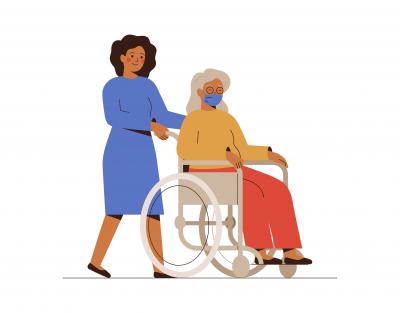
We at ADAA understand that being a caregiver, whether by profession or a desire or duty to care for family and friends, can be extremely rewarding, not to mention admirable. But it is physically and mentally exhausting and can take a toll on one’s emotional wellbeing. If you are a caregiver, you probably often put others’ needs before your own. Sacrificing your own time, energy and physical and emotional needs can be draining. Most caregivers will feel overwhelmed, stressed, anxious and probably even sad at some point, but if those feelings get to a stage where they affect your quality of life and you have difficulty functioning day to day (understanding anxiety & depression), it’s time to seek care for yourself.
Always consult your doctor or contact a mental health provider if you feel you are experiencing any signs or symptoms of a mental health condition, especially if symptoms persist for two or more consecutive weeks. And remember that you cannot take care of anyone if you don’t take care of yourself first.
Support for Caregivers
It’s important to find resources and people that make you feel supported. Below is a list of mental health resources to support the daily experiences of caregivers.
- Alzheimer’s Counseling
- AARP Local Caregiver Resource Guides – AARP
- Caregiver Action Network
- Caregiver's Guide to Anxiety - Anxiety UK
- Caring for the Caregiver
- Caregiving Counseling
- Caregiver Depression: A Silent Health Crisis - Caregiver.org
- Caregiving in the U.S- 2020 Edition- AARP
- Caregiver Stress - womenshealth.gov
- Family Caregiver Alliance
- Friend’s Health Connection -Podcast
- HealthWell Foundation
- Mental Health America's Getting Started Guide for Caregivers
- Signs of Stress - CareGiver Stress
- Taking Care Of Yourself - NAMI
- 11 Ways to Stop Caregiver-Related Depression - Aging Care
ADAA's Online Peer-to-Peer Communities
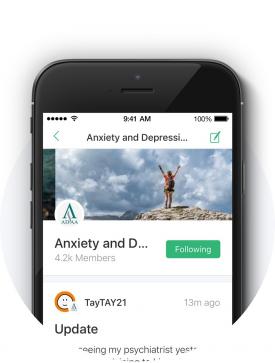
ADAA offers anonymous English and Spanish language peer-to-peer online anxiety and depression support groups. As a member you can connect with others, contribute to ongoing conversations or start your own conversation with a question or a post about your journey.
ADAA Resources
Personal Stories:
- Caregiving and Mental Health, Morgan Manning
- The Family Caregiver, Dominique Castro
Webinars and Podcasts:
- Avoiding Caregiver Burnout: Supporting a Mentally Ill Loved One, Inside Mental Health Podcast
- Overcoming Parental Anxiety: Responding to the Surgeon General’s Call to Support Parental Well-Being
- How to Help Your Child Through Anxiety
- Activating the Environment: Practical Tips for Caregivers to Enhance Care Coordination for Effective Treatment of Childhood Anxiety and OCD
- Helping Kids with Anxiety & Depression: Strategies for Parents and Caregivers
Resources:
- Is AI a Friend or a Risk? What Adults and Kids Should Know
- Why Letting Your Child Do Things on Their Own Really Matters
- All About Parent-Child Interaction Therapy (PCIT)
- Caregiving, series by Real World Health Care featuring ADAA member Ruth Lippin, LCSW, JD
- Tips for Parents and Caregivers
- Serious, Chronic, or Terminal Illnesses -Tips for Patients and Caregivers
Explore External Mental Health Resources
Access professional support, crisis services, and tools designed to help manage anxiety, depression, and related mental health conditions. While ADAA believes these sources provide valuable information, inclusion here does not represent a formal endorsement.
- Project EMPOWER is a free, evidence-based, 1-session online program for caretakers (e.g., parents, teachers, etc.) to equip them with skills to build bravery and reduce anxiety-driven avoidance in children. - Jenny Sung, ADAA Member
- Taking Care Of Yourself - NAMI
- AARP Local Caregiver Resource Guides - AARP
- Caregiver Depression: A Silent Health Crisis - Caregiver.org
- Caregiver Stress - womenshealth.gov
- Signs of Stress - CareGiver Stress
- Caregiver Depression: Prevention Counts - Mayo Clinic
- 11 Ways to Stop Caregiver-Related Depression - Aging Care
- Caregiver. 2002. Caregiver Depression: A Silent Health Crisis.
- Help for Cancer Caregivers. Anxiety.
- Mayo Clinic. Caregiver Depression: Prevention Counts.