
Advance Your Career. Become an ADAA Member Today!
Be Part of ADAA: Help Drive Research and Treatment in Mental Health - Join Today!
Featured Blog Post
Using Social Media to Advance Your Career in 2026
While many people use social media for personal connection and entertainment purposes, it has also become one of the most powerful tools for professional networking, establishing expertise, growing a business, and building a recognizable personal brand.
Live September CE/CME Webinar
Navigating Treatment Refusal: A Family Systems-Informed Approach
A Family Systems-Informed Approach teaches a practical framework you can integrate into your existing approach to treat family members’ distress while promoting recovery-supportive dynamics for the individual resisting care.
ADAA Live and On-Demand CE/CME Webinars
Check out ADAA's on-demand webinars - Free CE/CMEs for members
Welcome to ADAA's Professional Community
The Leading Professional Membership Association for Anxiety and Depression Experts
Join the only multidisciplinary professional organization in mental health that engages the world’s leading experts who focus on anxiety, depression and co-occurring disorders. ADAA members provide free evidence-based resources to help millions.
Upcoming Events
25
Jun 2026
1
Apr 2027
Take Note!

ADAA Patient Guide to Mood and Anxiety Disorders
Struggling with anxiety or depression? This easy-to-read guide from ADAA offers expert insights, real-life case examples, and practical mental health tools to
help you better understand and manage mood and disorders. Start your journey toward lasting mental wellness today.
Read More

Focal Brain Stimulation Interventions for Depression and Anxiety
Encouraged by data showing efficacy for depression and other neuropsychiatric conditions, as well as data suggesting direct effects on discrete behaviors relevant to these conditions, research in the use of focal brain stimulation is rapidly expanding.
Read More

ADAA Insights E-Newsletter
ADAA's free bi-weekly professional e-newsletter delivering current relevant research and treatment news about anxiety disorders and depression.
Read More
RESOURCES AND NEWS
Aligning Science, Treatment, and Education
 Membership Benefits
ADAA membership offers an extensive list of learning, networking and publication benefits available to you through your ADAA membership.
Learn More
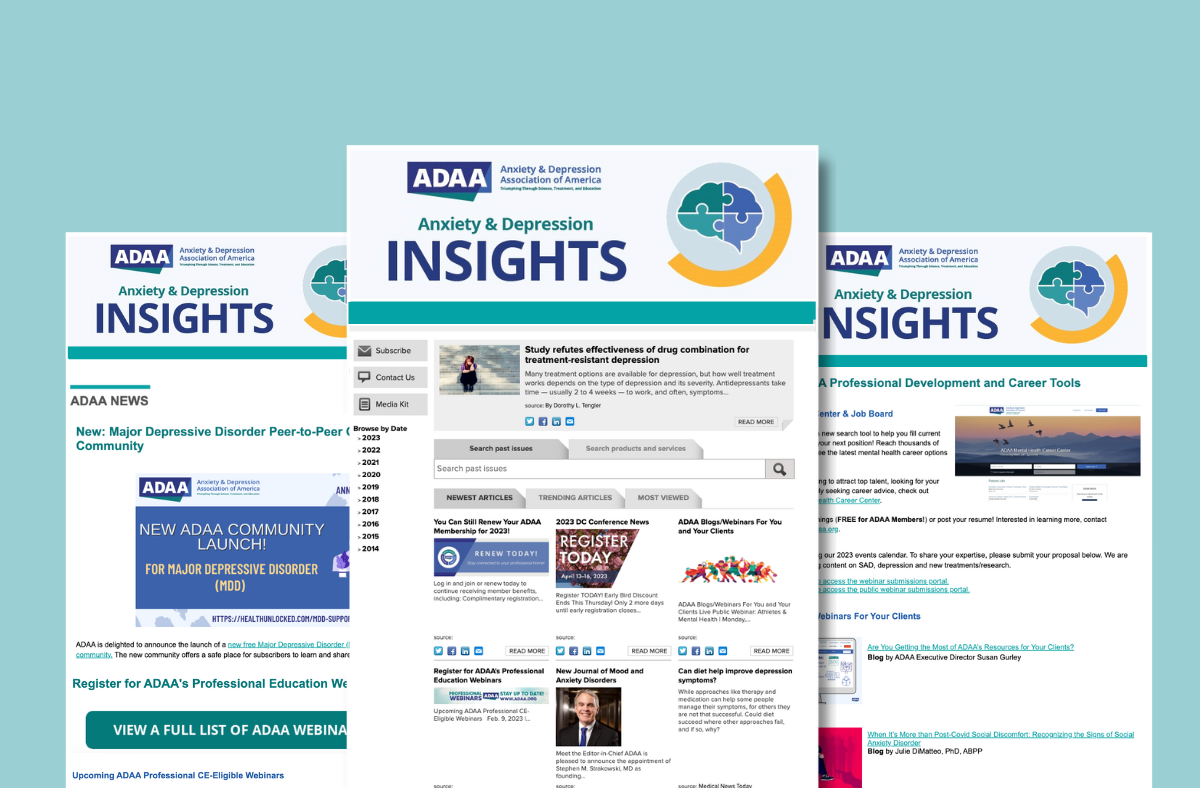 ADAA Insights
ADAA's free bi-weekly professional e-newsletter delivering current relevant research and treatment news about anxiety disorders and depression.
Subscribe
 Managing Your Profile - ADAA Find Your Therapist Directory
In line with our mission, the Find Your Therapist Directory connects ADAA members with those looking for mental health care. The enhanced platform also allows our members to promote their practice and make referrals through a personalized directory listing. All listed providers, offering both in-person or virtual therapy, are ADAA members who have chosen to be listed.
Learn More
MEMBERSHIP
New to ADAA? Currently a member? Have a question about your membership?
Learn more about your Member Benefits and Institutional Membership.
We are proud of our members! Read our featured Members in the News.

Boost Search Results
Off